Better Together: How Indie Filmmakers Are Winning With Handpicked Creative Squads
There's a persistent myth in filmmaking that bigger means better. More staff, more departments, more overhead — the idea being that a fully loaded internal team produces a more polished product. Hollywood has operated on that logic for decades. But out here in the indie world, a completely different playbook is getting written, and the results are hard to argue with.
Independent filmmakers are increasingly skipping the "build it all yourself" model and instead curating what some in the industry are calling a collab stack — a deliberate, project-by-project network of specialized creative partners. Think of it less like assembling a permanent staff and more like putting together a band for a specific album. You pick the right people for the right sound, you make the record, and then you stay connected for the next one.
The economics make sense. The creative chemistry? That's where it gets really interesting.
The Case Against Scaling Up
Let's talk money for a second, because that's usually where the conversation starts. Hiring a full-time VFX artist, a dedicated composer, a colorist, and a sound designer on staff sounds great until you run the actual numbers. Salaries, benefits, equipment costs, and the brutal reality that those specialists will sit idle between projects — it adds up fast.
Contracting out to independent specialists, on the other hand, means you're paying for exactly what you need, when you need it. A composer who does nothing but score psychological thrillers brings a depth of focus that a generalist staff composer simply can't match. Same goes for a VFX artist who's spent five years perfecting a particular visual style. You're not just buying their time — you're buying years of specialized obsession.
For smaller productions working with budgets under $500K, this model isn't just efficient. It's often the only way to access that level of craft at all.
Complementary Creatives, Not Just Contractors
Here's the distinction that separates a great collab stack from a basic freelance roster: intentional complementarity. The best indie partnerships aren't random — they're built around creative tension that produces something neither party could make alone.
Take the growing number of director-composer partnerships forming outside the traditional studio system. These aren't one-off arrangements. They're ongoing creative relationships where the composer understands the director's visual language deeply enough to score a rough cut before it's even fully edited. That kind of shorthand doesn't happen with a cold hire. It develops over shared projects, honest conversations, and genuine mutual respect for each other's craft.
Similarly, indie producers are increasingly pairing up with VFX boutiques that specialize in a specific aesthetic — whether that's grounded, photorealistic effects or stylized, graphic-novel-inspired visuals. Rather than hiring a general VFX house and directing them toward a look, these producers find artists who already live in that visual space. The collaboration becomes additive rather than instructional.
Case Study: The Pod Model in Action
Across the indie film landscape in cities like Austin, Atlanta, and Chicago — markets that have grown significantly as alternatives to LA — small production pods are forming around shared creative values rather than corporate structure.
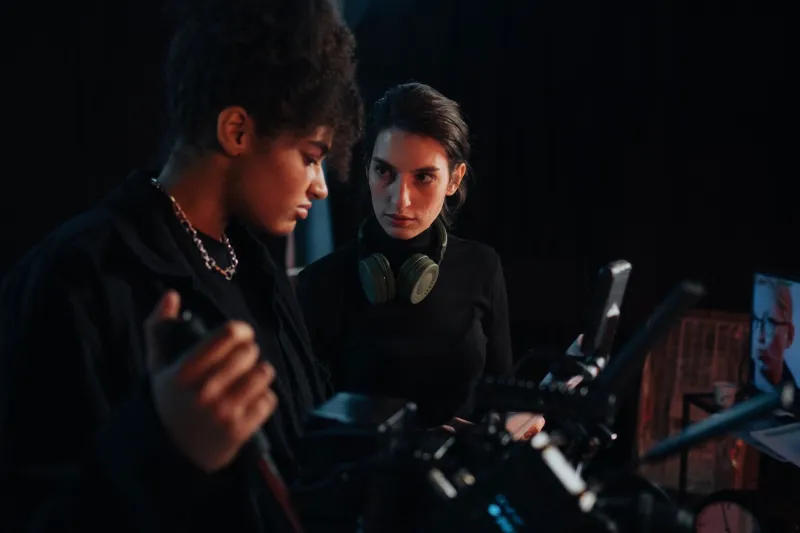
One common model: a director partners with a DP they've worked with before, brings in a sound designer they met at a festival, and connects with a colorist recommended through their editor. No one is on payroll. Everyone has their own clients and their own projects. But when this particular group comes together, the creative output has a coherence and quality that surprises even seasoned viewers.
What makes it work isn't just talent — it's trust and transparency. Because everyone in the pod is an independent operator, there's no internal politics, no jockeying for budget, no departmental silos. The conversation stays focused on what's best for the film.
The Economics of Strategic Outsourcing
Let's be real: outsourcing gets a bad reputation in some creative circles, like it implies cutting corners. But strategic outsourcing to specialized partners is almost the opposite of that. You're not cheapening the work — you're upgrading it by routing each component to the person most qualified to handle it.
A useful framework: think of your production budget as a series of quality investments rather than a flat payroll. Where does craft matter most for this specific project? Allocate accordingly. If your film lives or dies by its score, that's where you find the best composer your budget can reach. If the edit is the heart of the story, that's where you don't cut corners.
Independent specialists are often more flexible on deal structures than agencies or studios, too. Revenue share arrangements, backend points, and creative credit trades are all live options in the indie collab world — deals that simply don't exist inside a traditional production house.
Keeping the Chemistry Alive
The practical challenge of this model is relationship management. Building and maintaining a strong collab network takes real effort. Creatives get busy, move to other cities, shift their focus. The producers who do this well treat their creative partnerships like any other long-term relationship: with consistent communication, mutual investment, and genuine appreciation.
Many indie filmmakers are now using shared project spaces — Notion boards, Slack channels, even just regular check-in calls — to keep their networks warm between productions. The goal is that when a new project spins up, the conversation doesn't start from zero. It picks up where the last one left off.
Festivals, workshops, and online communities like Stage 32 or Film Riot's forums have also become key venues for expanding and refreshing these networks. The indie film world is smaller than it looks, and reputation travels fast in both directions.
The Bigger Picture
What the collab stack model ultimately represents is a fundamental rethinking of what a production company can look like. You don't need four walls and a staff directory to make great films. You need a clear creative vision, the humility to know what you're not best at, and the relationship skills to find people who are.
In a landscape where the tools of filmmaking are more accessible than ever, the real differentiator is increasingly who you make things with — and how well you work together. The indie creators building intentional, complementary creative networks aren't just making better movies. They're building a more resilient and sustainable version of the film industry, one handshake at a time.