Happy Accidents on Purpose: How Indie Filmmakers Are Turning Improvisation Into Their Greatest Asset
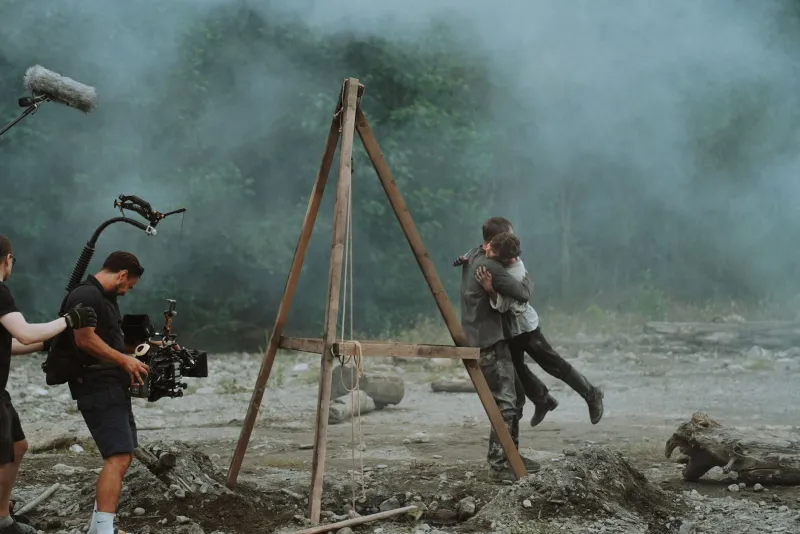
There's a scene in almost every great indie film where something feels too real — a stumble over words, a laugh that shouldn't be there, a moment where the actor seems to forget the camera exists. Chances are, that moment wasn't in the script. And increasingly, that's exactly the point.
Independent filmmakers across the country are rethinking what it means to "be prepared" on set. Rather than locking every beat into place before the first take, a new wave of directors is building deliberate breathing room into their productions — space where actors can wander, discover, and occasionally fall apart in the most beautiful ways possible.
The Script Is a Suggestion (Sometimes)
For director Marisol Vega, who shot her debut feature Ordinary Weather on a shoestring budget in Albuquerque, the decision to loosen the reins was born out of necessity. "We didn't have time for 20 takes," she says. "So I told my leads — know the scene, know the feeling, and then just live in it. What came out of that was way more interesting than anything I'd written."
Vega's experience isn't unique. Across indie productions big and small, directors are discovering that the screenplay is less a rigid blueprint and more a launching pad. The best stuff, many of them say, tends to happen in between the lines.
This philosophy isn't new — John Cassavetes built a career on it, and the mumblecore movement of the early 2000s made improvisation practically a genre unto itself. But what's different now is the intentionality behind it. Today's indie filmmakers aren't just letting things happen; they're engineering conditions where happy accidents become likely.
Engineering Spontaneity
So what does that actually look like on a working set? According to several directors who've embraced the approach, it starts long before the cameras roll.
Reed Calloway, who directs both narrative shorts and branded content out of Austin, Texas, spends a significant chunk of pre-production doing what he calls "character immersion sessions" — essentially extended rehearsals where actors live inside their roles without any pressure to perform. "I want them bored with the script by the time we shoot," he explains. "When they're bored, they start playing. And when they start playing, that's when I hit record."
Calloway also keeps a second camera rolling almost constantly, even between setups. Some of his most-shared clips online — the ones that rack up hundreds of thousands of views — came from footage his crew almost didn't bother to keep. "We had this moment where two of our actors were just goofing around between takes, completely in character but not doing anything scripted. That clip went everywhere. People thought we planned it."
They didn't. That's the whole point.
When Breaking Character Becomes the Scene
One of the more counterintuitive discoveries indie filmmakers are making is that actors breaking character can sometimes be more compelling than actors holding it. A genuine laugh, an unexpected emotional crack, a line reading that goes sideways and somehow lands harder — these moments carry a texture that polished performances often can't replicate.
Director Priya Anand, whose short film Saltwater earned a festival run last year, recalls a pivotal scene where her lead actor simply couldn't get through a monologue without tearing up before the scripted moment. "We were trying to hit this very specific beat, and he kept getting emotional too early. I finally just said, let it happen whenever it happens. And the take where he completely fell apart in the first twenty seconds? That's the one we used. It destroyed audiences."
Anand has since restructured how she approaches emotionally heavy material. Instead of mapping out the precise moment a scene should peak, she creates a general emotional landscape and then follows her actors into it. "You have to trust them," she says. "And you have to trust that the unexpected thing might be the right thing."
The Viral Factor Nobody's Talking About
There's a practical upside to all this that's hard to ignore: unscripted moments tend to travel. In an era where audiences are drowning in content that feels manufactured and algorithm-tested, authenticity cuts through. A raw, unplanned moment in an indie film — or even a clip from behind the scenes — can generate more organic reach than a carefully crafted trailer.
This is something creators at Undroid Productions have seen firsthand working with independent filmmakers on their content strategies. The clips that get shared aren't always the ones with the best lighting or the sharpest dialogue. They're the ones where something real seems to be happening. And audiences, even if they can't articulate why, can feel the difference.
Calloway has started thinking about improvisation as part of his distribution strategy, not just his creative process. "If I know a moment landed in a way that feels surprising and genuine, I'm already thinking about how we clip that and put it out into the world. It's content that markets itself because it doesn't feel like marketing."
Letting Go Without Losing Control
Of course, there's a real craft to making improvisation work — and a real risk of it going nowhere useful. The directors who do it well are quick to point out that freedom on set doesn't mean chaos. Structure still matters. Preparation still matters. The difference is in how rigidly those structures are enforced once the cameras are rolling.
"You have to know your story cold before you can let go of it," says Vega. "If you don't have a clear sense of what the scene needs emotionally, improvisation just becomes noise. But when you know what you're after, you can recognize it the second it shows up — even if it shows up in a form you didn't expect."
That balance — between preparation and openness, between intention and accident — is really where the magic lives. The best unscripted moments in indie film aren't random. They're the product of directors who've done enough work to know a great take when it wanders into the frame.
The New Indie Playbook
As independent filmmaking continues to evolve, the old assumptions about what a "professional" production looks like are getting harder to defend. Audiences aren't rewarding polish for its own sake. They're rewarding connection, surprise, and the feeling that something genuine is happening on screen.
Improvisation, handled with care, delivers all three. And for indie creators working without the safety nets of big studio budgets, it offers something else too: a reminder that constraints can be creative fuel, and that sometimes the best thing a director can do is get out of the way and let the scene breathe.
The script will always be the foundation. But more and more, the building is happening somewhere else — in the spaces between takes, in the moments nobody planned for, in the happy accidents that turn out to be anything but accidental.