Heard But Not Seen: How Indie Sound Designers Are Stealing the Sonic Show From Hollywood
There's a moment in almost every great film where you stop watching and start feeling. Your chest tightens. Your skin prickles. You lean forward without realizing it. Nine times out of ten, that moment isn't driven by a visual effect or a clever line of dialogue — it's sound doing the heavy lifting.
Hollywood has known this for decades, pouring millions into Dolby Atmos rigs, massive Foley stages, and sound libraries the size of small countries. But something unexpected has been happening in the indie world over the last several years: the gap is closing. Fast.
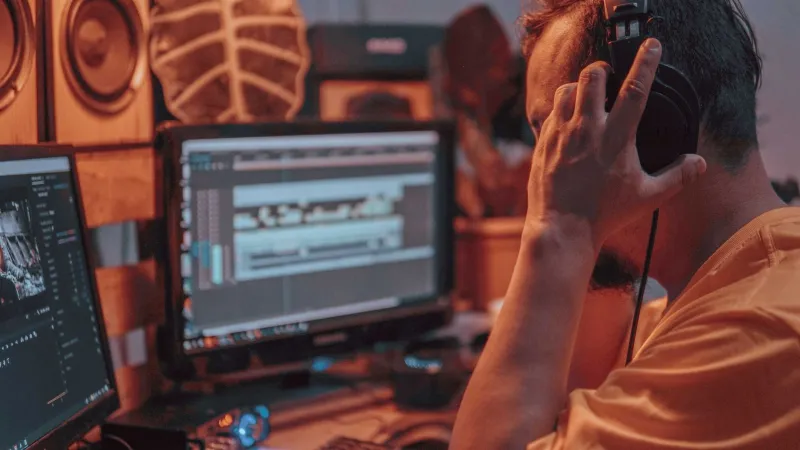
Independent sound designers — working out of converted garages, spare bedrooms, and modest home studios across the US — are crafting audio landscapes that are genuinely competing with their big-budget counterparts. And in some cases, beating them outright.
The Gear Revolution Nobody Talked About
Let's start with the obvious question: how? The short answer is that professional-grade audio equipment got dramatically more affordable right around the same time digital distribution opened up new avenues for indie work to reach real audiences.
Field recorders that would have cost five figures a decade ago are now accessible for under a thousand dollars. Digital audio workstations like Reaper and even Logic Pro have democratized the editing and mixing process. Plug-in ecosystems — iZotope's RX suite being a fan favorite in indie circles — have given small-shop designers tools that were once locked behind studio contracts and six-figure budgets.
"When I started out, I was recording Foley with a borrowed Zoom H5 and a moving blanket stapled to my wall," says Marcus Webb, a Chicago-based sound designer whose work on the 2023 regional thriller Hollow Creek picked up serious festival buzz. "Nobody watching that film knew that. They just knew something felt real about it."
That word — real — comes up constantly when you talk to indie sound pros. It's not just a quality judgment. It's a philosophy.
Authenticity as a Competitive Advantage
Here's the thing about blockbuster sound design: it's often engineered to impress rather than immerse. Explosions that shake theater seats, orchestral swells timed to the millisecond, sound effects so polished they almost feel synthetic. There's craft in that, absolutely. But there's also a kind of emotional distance baked in.
Independent filmmakers, often working with tighter narratives and more intimate character studies, tend to approach sound from a completely different direction. The goal isn't spectacle — it's empathy.
Take the work of Priya Nair, a Brooklyn-based designer who's built a reputation on what she calls "emotional texture." Her approach involves layering sounds that audiences can't consciously identify but can absolutely feel — the barely-audible hum of fluorescent lights in a scene about anxiety, the way footsteps change character on different surfaces to reflect a character's internal state.
"I'm not trying to tell people what to feel," Nair explains. "I'm trying to create a space where the feeling can happen naturally. Big productions sometimes over-explain the emotion through sound. I want to leave room for the audience to meet the story halfway."
This philosophy of restraint — of knowing what not to put in the mix — is arguably one of the most sophisticated tools in the indie sound designer's kit. And it's one that no amount of budget can automatically buy.
Recording the World Differently
One area where indie designers have developed a genuinely distinct identity is field recording. Without access to massive, controlled Foley stages, many independent sound artists have turned necessity into a creative edge — heading out into the actual world to capture sounds in their natural, imperfect context.
Marco Estevez, a Los Angeles-based designer who splits his time between narrative shorts and documentary work, has built a reputation for what he calls "location-specific audio DNA." Instead of reaching for a library sound for, say, a busy diner scene, he'll go record at an actual diner — capturing not just the ambient chatter but the specific acoustic fingerprint of that space.
"Every room sounds different. Every city sounds different. When you use stock sounds, you're using someone else's world," Estevez says. "When you go record the real thing, you're giving the film its own identity. Audiences can't always name what they're hearing, but they know when something is theirs."
This kind of sonic specificity is increasingly being recognized by critics and festival programmers as a marker of serious craft — and it's coming almost entirely from the indie side of the industry.
Spatial Audio and the New Frontier
If affordable gear started the revolution, spatial audio might be the thing that sustains it. Technologies like Dolby Atmos and Sony 360 Reality Audio — once exclusively the domain of massive theatrical releases — are now available to independent creators through platforms like Apple Music and streaming services that support immersive audio formats.
Some indie sound designers are already years deep into experimenting with these tools. The ability to place sound in three-dimensional space, to make a whisper feel like it's coming from just behind the viewer's left ear, opens up storytelling possibilities that are still being mapped out.
"We're at this incredible inflection point," says Webb. "The tools exist. The distribution channels exist. The only thing limiting indie sound design right now is imagination — and that's honestly the best possible situation to be in."
What Hollywood Could Learn
It would be easy to frame this as an underdog story — scrappy indie creators sticking it to the studio system. But the more honest read is that independent sound design is advancing the entire craft, pushing the conversation about what cinematic audio can actually do.
Some studio productions are starting to pay attention. Consulting relationships between independent designers and larger productions are becoming more common. The cross-pollination is real, and it's making films better across the board.
But the spirit of the indie sound movement — the willingness to experiment, to reject convention, to chase emotional truth over technical spectacle — that's something that lives most naturally outside the studio system. It's harder to take creative risks when a hundred million dollars is on the line.
For the sound designers working in spare bedrooms and converted garages, that risk is the whole point. And audiences, whether they can articulate it or not, are hearing the difference.