Dead Ends That Didn't Die: What Shelved Projects Are Teaching Indie Filmmakers About Their Best Work

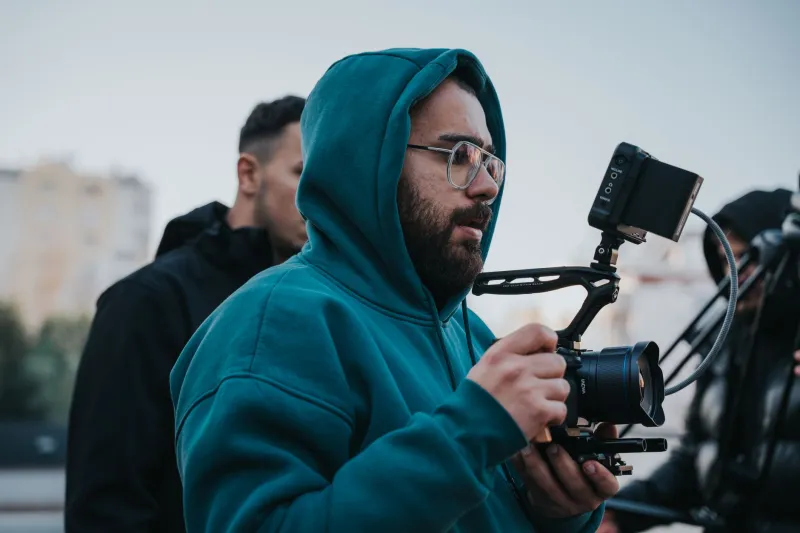
Photo by Photo by Fethi Benattallah on Unsplash on Unsplash
Ask any indie filmmaker about their cancelled projects and watch what happens. There's usually a pause. Maybe a small laugh. Then a story that's equal parts painful and illuminating — because the stuff that didn't get made almost always taught them more than the stuff that did.
In Hollywood, a cancelled project is a quiet disaster. Budget gets written off, careers take hits, and the whole thing gets buried under NDAs. But in the indie world, the stakes are different. Smaller. More forgiving. And that lower-pressure environment is creating something genuinely valuable: a culture of productive failure, where unfinished work becomes the foundation for future breakthroughs.
The Myth of the Clean Win
There's a version of the filmmaker origin story that goes something like this: visionary creator has idea, scrapes together money, shoots film, gets into Sundance, everything changes. It's a great story. It's also wildly incomplete.
For every short film that made the festival rounds or every debut feature that found distribution, there are usually two or three projects that quietly collapsed before anyone saw them. A documentary that lost its subject. A narrative short that ran out of money after day three of a five-day shoot. A web series pilot that just... never connected.
These aren't anomalies. They're the actual texture of indie filmmaking. And the creators who treat them as such — as part of the process rather than evidence of failure — are the ones who tend to make the most interesting work over time.
What a Shelved Project Actually Contains
Here's the thing about an abandoned production: it's not empty. It's full of information.
A script that couldn't get funded tells you something about how you're pitching, what's missing from the concept, or whether the idea was ever as strong as it felt at 2 a.m. when you wrote the first draft. A shoot that fell apart tells you about your prep process, your casting instincts, your ability to manage a crew under pressure. A rough cut you couldn't finish editing tells you about pacing, structure, and what you actually captured versus what you thought you captured.
None of that information disappears when you close the project folder. It just sits there, waiting for you to go back and look at it with fresh eyes.
Many indie filmmakers describe returning to old, unfinished work after a year or two and being genuinely surprised by what they find — not just the flaws, but the ideas buried inside that were actually good. A piece of dialogue that belongs in something else. A visual approach that was right but applied to the wrong story. A character who deserved a better movie.
The Resurrection Question
Not every shelved project should come back to life. Part of the skill here is learning to tell the difference between a project worth revisiting and one that needs to stay buried.
A useful question: Did the project fail because of execution, or because of concept? If the idea was sound but the resources, timing, or team weren't right, there's a real argument for a second attempt. If the idea itself was the problem — if it was never fully formed or never genuinely excited you — resurrecting it is just postponing the same lesson.
Some creators use a simple gut-check: when they re-read the script or re-watch the rough footage, do they feel a pull? Does it still feel like it's asking to exist? If the answer is yes, that's worth paying attention to. If the answer is a polite shrug, it's probably time to mine it for parts and move on.
Profiles in Productive Failure
Across the indie film community, there are creators who've built their strongest work directly out of the wreckage of earlier attempts.
One pattern that shows up repeatedly: a filmmaker spends months developing a feature, gets partway into pre-production, and then watches the project collapse — funding pulled, a key cast member drops out, a location falls through. Devastated in the moment, they shelve everything. Then, a year later, they revisit their prep materials and realize that the research they did for that failed project is the perfect foundation for something smaller, tighter, and more personal. The feature becomes a short. The short wins a festival award. The festival award opens doors the original feature never would have.
The failure wasn't a detour. It was the route.
Another version of this story involves tone and genre. A creator tries to make a thriller, can't crack the tension, and abandons the project. But in the process of trying to fix it, they discover they're actually much better at quiet, character-driven drama. The cancelled thriller becomes the thing that pointed them toward their real voice.
The Lower Stakes Advantage
This is where indie filmmaking has a structural edge that doesn't get talked about enough. When a major studio shelves a $80 million project, the fallout is enormous. Careers, contracts, PR — all of it gets messy. The financial and reputational pressure means cancelled projects get treated like disasters, because for the people involved, they often are.
But when an indie filmmaker shelves a $30,000 short film or a $150,000 micro-feature, the math is different. Painful, yes. Career-ending, rarely. The lower financial exposure means there's actually room to sit with the failure, examine it honestly, and extract what's useful without the whole thing becoming a crisis.
That breathing room is a creative asset. It's what allows indie filmmakers to take risks that studio productions can't afford — and to learn from the ones that don't pan out.
Building a Practice Around Incompletion
Some of the most thoughtful indie creators have started building explicit reflection practices around their shelved work. Not just moving on, but actually sitting down with what didn't work and documenting what they learned.
This might look like a post-mortem document written six months after a project collapses. Or an annual review of everything in the "on hold" folder. Or a conversation with a trusted collaborator about what a failed project was actually trying to say — and whether there's another way to say it.
The goal isn't to wallow. It's to treat incomplete work with the same seriousness as completed work, because in terms of what it can teach you, it often deserves it.
The Real Measure of a Project
Maybe the most important shift here is redefining what makes a project valuable. Completion is one measure. Distribution is another. Festival recognition, audience response, critical reception — all valid metrics.
But what you learned is also a measure. And sometimes, the projects that never got finished are the ones that move the needle the most on that particular scale.
The filmmakers who understand this aren't just more resilient. They're more dangerous — in the best possible way. Because they're carrying a library of hard-won knowledge that most people never bother to collect. And that knowledge has a way of showing up, quietly and powerfully, in everything they make next.