The One Buy That Broke Everything Open: Indie Filmmakers on the Gear That Changed the Game
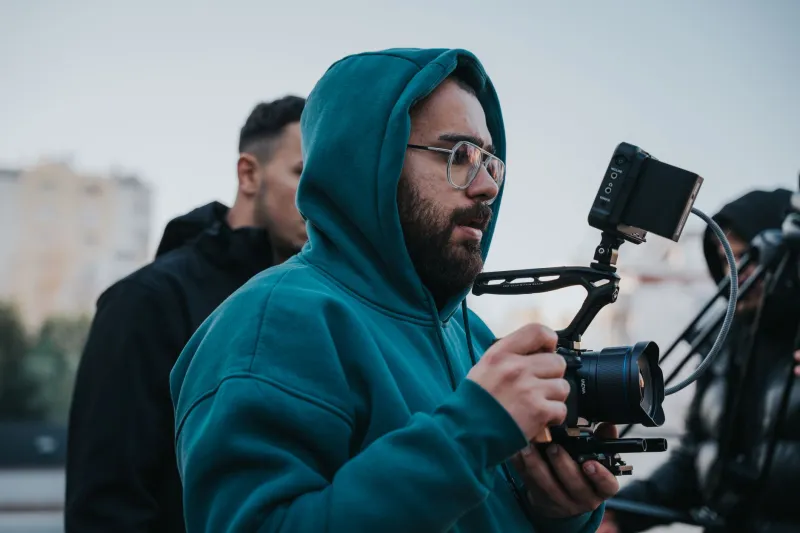
Every indie creator has a gear story. Usually it involves a credit card, a leap of faith, and a piece of equipment that either delivered or collected dust in a closet for two years before being sold at a loss on eBay.
But every once in a while, the purchase lands. Not just in a "this is a solid tool" way — in a way that genuinely reorganizes what you're capable of making. The kind of buy that splits your creative timeline into before and after.
We reached out to a cross-section of working indie filmmakers, producers, and cinematographers — people actually making things with real constraints and real stakes — and asked them one question: What was the single piece of equipment that changed everything for you? Not the most expensive thing they own. Not the thing with the best specs. The thing that solved a real problem and opened a door they didn't know was there.
Here's what they told us.
"It Was Never About the Camera"
Marcus, a documentary filmmaker based out of Atlanta who's been producing social-issue shorts for about six years, didn't hesitate for a second.
"A good fluid-head tripod," he said. "That's it. I know that sounds embarrassing when everyone's talking about sensor size and dynamic range, but I was shooting handheld everything because I thought that's what docs were supposed to look like. Rough and immediate. And some of my stuff was good, but a lot of it just looked unstable in a way that felt accidental rather than intentional."
The tripod, he says, didn't make his work look more polished — it made his movement choices mean something. "When everything is shaky, nothing is shaky. The moment I had a stable option, I could decide when to go handheld and that decision started carrying weight. The chaos became a tool instead of just the default."
The lesson underneath the lesson: sometimes the gear that changes everything isn't what lets you do more. It's what lets your existing choices actually communicate.
The Audio Revelation
This one came up more than any other category, which probably says something about how consistently audio gets underestimated until it becomes a crisis.
Deanna, who produces narrative shorts in the Pacific Northwest, spent her first three years of filmmaking treating audio as an afterthought. "I'd rent cameras, I'd obsess over lenses, and then I'd show up on set with a built-in mic or some cheap lav that I'd borrowed from a friend. And I kept wondering why my footage felt small. Why it didn't feel real."
The investment that shifted her trajectory: a quality directional shotgun mic paired with a compact audio recorder she could actually monitor in real time. "The first time I heard clean, present, full-bodied dialogue on a location I thought was going to be a nightmare for sound — I almost cried. Not because the mic was magic, but because I suddenly understood that I'd been making my actors work twice as hard for half the emotional payoff. Bad audio was undercutting everything they were giving me."
She now considers audio her first budget line, not her last. "People will forgive a lot of visual imperfection. They will not forgive feeling like they're watching something through a wall."
When the Light Finally Made Sense
For Diego, a cinematographer who splits his time between commercial work and passion projects, the transformative purchase was a set of compact, battery-powered LED panels with color temperature control.
"Before that, I was either at the mercy of available light or I was dragging around equipment that required a generator or a truck," he said. "Which meant I was either making location compromises I didn't want to make, or I was just not shooting at all because the logistics were too heavy for the budget."
The panels didn't replace his full lighting kit. They made the full kit unnecessary on a whole category of projects. "Suddenly I could shoot in a car, in a cramped apartment, in a stairwell at 2 a.m. — places where the story actually lived — and I could shape the light to serve the scene instead of just accepting whatever the room gave me."
The creative unlock wasn't better-looking images, exactly. It was access to environments he'd been avoiding. "I started writing toward difficult locations instead of away from them. The gear changed my imagination."
The Stabilizer That Changed How Stories Moved
Jamila, a filmmaker in Chicago who makes personal narrative films about family and memory, bought a compact gimbal stabilizer after watching her debut short get passed over at festivals she thought it was ready for.
"The feedback I kept getting was that the film felt static. And I knew what they meant — I'd made safe visual choices because I was scared of looking amateurish. Everything was locked off, everything was deliberate, and none of it moved the way life actually moves."
The gimbal, she says, forced her to rethink blocking entirely. "When you can follow someone through a space fluidly, you start thinking about how people actually exist in rooms. How they drift, how they pause, how two people in a conversation don't just stand still and talk at each other. I started choreographing movement instead of just blocking positions."
Her second film, shot largely with the gimbal, traveled to four festivals. "Same budget. Same crew. Same me. Different tool, completely different film."
The Real Pattern
Looking across all of these stories, a few things stand out.
None of these purchases were the most expensive option available. None of them were bought on impulse. Every single one of them was bought to solve a specific, concrete problem that the filmmaker had already identified — often painfully — in their existing work.
The gear didn't create the vision. The vision identified the gap, and the gear filled it.
That's a meaningful distinction for any indie creator staring at a wishlist and trying to figure out where to put limited dollars. The question isn't "what's the best piece of equipment I could own?" The question is "what is the specific thing that my current work cannot do — and what's the most direct path to being able to do it?"
Answer that honestly, and the purchase almost makes itself.