Where Nobody's Looking: How Indie Filmmakers Are Finding Their Most Electric Performers
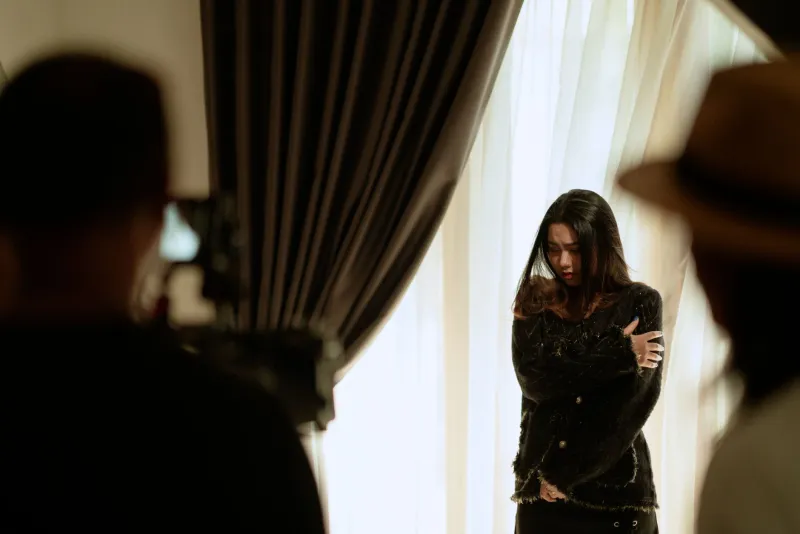
There's a moment every indie filmmaker knows. You're sitting in a folding chair, watching your fifteenth audition of the day, and every performance feels like it was built in the same factory. Technically clean. Emotionally predictable. Perfectly fine and completely forgettable.
Then something shifts. Someone walks in who doesn't quite belong — maybe they found the audition through a Facebook group, or a friend texted them the flyer, or they just wandered in off the street. And they do something that makes everyone in the room sit up a little straighter.
That moment? Indie filmmakers are starting to engineer it on purpose.
The Problem With the Standard Pipeline
Conventional casting works like a filter. Actors train, they sign with agencies, they build reels, they submit through the right channels. By the time they reach your audition room, they've been processed — shaped by years of feedback, coaching, and industry expectations about what a "good" performance looks like.
For big-budget productions with specific technical requirements, that pipeline makes sense. But for indie films, especially character-driven stories that live or die on emotional authenticity, that same filtering process can actually work against you. You end up with actors who are very good at performing and not always great at being.
The filmmakers who are consistently landing breakthrough performances have figured out that the most compelling screen presence often comes from people who haven't been coached out of their instincts yet.
Theater Communities Are a Goldmine
Local and regional theater — not Broadway, not the big regional houses, but the scrappy community theater scene operating out of church basements and converted warehouses in cities like Columbus, Albuquerque, and Baton Rouge — is producing some of the most underutilized acting talent in the country.
These performers have done something most film actors haven't: they've built characters from scratch, night after night, in front of a live audience that gives them immediate feedback. There's no editing room to fix a flat moment. That pressure creates instincts that translate surprisingly well to camera work, even if the technical vocabulary is different.
Several indie producers have made it a habit to attend community theater productions in their area, not as entertainment but as scouting trips. They're not looking for polish. They're looking for the moment when an actor stops performing and starts living inside a scene. That quality is rare, and it doesn't require a union card.
Social Media as an Audition Tape Nobody Knew They Were Making
Here's a counterintuitive truth about the social media era: the people who are most compelling on screen are often creating content for audiences of a few hundred followers, not a few million. The ones chasing virality tend to perform for the algorithm. The ones making stuff because they genuinely can't help it? Those are the people worth watching.
Indie filmmakers are increasingly using platforms like TikTok, Instagram Reels, and even YouTube as informal casting databases. They're not looking for influencers. They're looking for people who have an undeniable quality in front of a camera — a naturalness, a specificity, a way of occupying space that makes you want to keep watching.
The practical move is to search hashtags related to your story's themes or setting. A film set in the Louisiana bayou might surface someone from Houma posting cooking videos who has more screen magnetism than anyone you'd find through a traditional breakdown service. You're not casting them because they're a content creator. You're casting them because the camera already loves them and they don't know it yet.
Rethinking What an Audition Actually Is
Traditional auditions ask actors to perform prepared material in an artificial setting. That format rewards preparation and penalizes people who haven't been trained in how to audition — which is a completely different skill from acting.
A growing number of indie directors are experimenting with formats that strip away the performance layer entirely. Instead of sides from the script, they're doing extended conversations. They're asking potential cast members to talk about something that genuinely matters to them, then watching what happens to their face, their posture, the way their voice changes. They're setting up low-stakes improvisational scenarios and observing how people respond when they're not trying to impress anyone.
Some directors take it even further. They'll scout someone at a diner, a farmer's market, or a community meeting — someone who caught their eye for no reason they can immediately articulate — and invite them to have a casual conversation about the project. No pressure, no formal audition. Just a conversation that might turn into something.
This approach requires more time and patience than running standard auditions. But the payoff is access to a quality of presence that the conventional process almost never surfaces.
The Psychology Behind the Phenomenon
Why does this work? Part of it is simple: people who haven't been trained to perform have no learned habits to unlearn. They bring their actual selves into a role rather than a constructed version of what they think the role requires.
But there's something deeper happening too. When someone has never been through the professional audition grind, they haven't developed the specific kind of self-consciousness that process tends to create. They're not managing their performance in real time. They're not calculating whether what they're doing reads as "too much" or "not enough." They're just responding.
For certain kinds of stories — intimate character studies, films rooted in specific subcultures or communities, anything that needs to feel like it was captured rather than constructed — that quality is worth more than technical training.
What This Means for Your Next Project
None of this is an argument against working with trained actors. Plenty of classically trained performers are extraordinary, and there are roles that genuinely require technical precision that only comes from years of craft development.
But if you're an indie filmmaker building a project that depends on emotional truth, it's worth asking whether you're limiting yourself by only looking where everyone else is looking. The casting room is a useful tool. It's not the only one.
Before your next production, spend some time in your community. Go see local theater. Scroll through social media with different eyes. Have conversations with people who interest you for reasons you can't quite name. You might find that the most powerful performance in your film belongs to someone who didn't even know they were auditioning.