Built to Bend: The Indie Filmmaker's Case for Scheduling Breathing Room Before You Need It
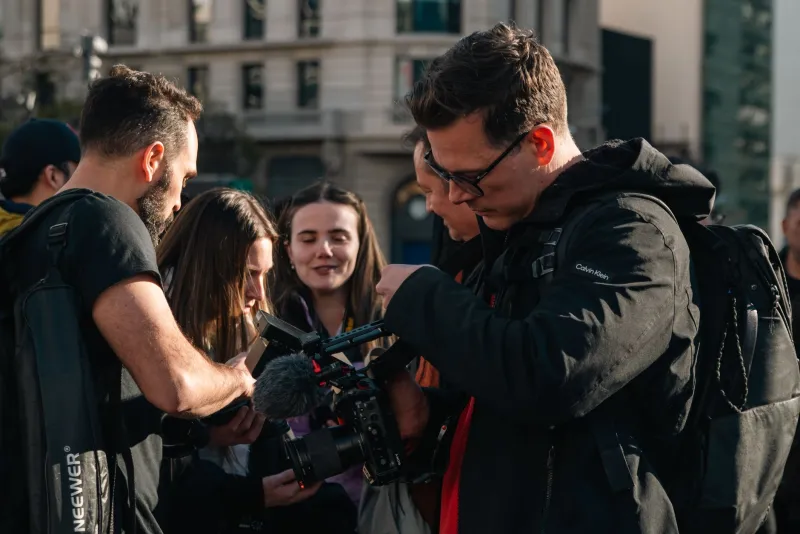
Every indie production schedule is, at its core, an act of optimism. You're betting that the weather cooperates, the locations stay available, the cast shows up on time, and nothing breaks that can't be fixed with gaffer tape and a positive attitude.
Sometimes that bet pays off. A lot of the time, it doesn't. And when it doesn't, the filmmakers who survive — and occasionally thrive — are the ones who planned for the plan to fail.
Building flexibility into a rigid production schedule isn't a sign of weak planning. It's a sign of experienced planning. And the indie creators who've figured this out are treating buffer days, contingency blocks, and adaptive scheduling frameworks not as luxuries, but as essential production infrastructure.
The False Economy of the Tight Schedule
There's a particular kind of pressure that descends on low-budget productions when the money is thin and the clock is ticking. Every hour on set costs something — location fees, equipment rental, crew pay, or just the opportunity cost of time. The instinct is to pack the schedule as tightly as possible and run at full sprint from call time to wrap.
It makes sense on paper. In practice, it's a trap.
A schedule with no slack has no capacity to absorb anything unexpected — and on an indie set, unexpected is basically the default state. A performer who's off on a particular day. A shot that takes three times as long as anticipated because the light isn't cooperating. A location that suddenly becomes unavailable for the afternoon session. Any of these, on a packed schedule, creates a cascade. You cut a scene. You rush a setup. You move on before you've actually got what you need.
The footage you don't get on day four is the footage you'll desperately wish you had in the editing suite six months later.
What a Buffer Day Actually Looks Like
A creative buffer day isn't a vacation day built into the schedule. It's a deliberately unscripted production day — a block of time held in reserve for scenes that ran long, pickups that couldn't happen on the original day, or opportunities that emerged during the shoot that nobody anticipated.
In practice, many indie teams structure these as half-days or modular blocks rather than full production days. The goal is flexibility, not padding. Some productions assign buffer time at the end of each shooting week. Others hold a dedicated pickup day at the very end of the shoot, after principal photography wraps, specifically for anything that needs revisiting.
The key is that these days are planned in advance, budgeted for, and protected. The moment you start treating buffer time as overflow space for things you should have scheduled properly in the first place, you've lost the point.
Chasing the Unexpected
Here's the part that surprises filmmakers who've never built buffer time into a schedule before: it's not just defensive. It's generative.
Some of the best material that ends up in indie films comes from moments nobody planned — an actor who finds something unexpected in a scene during a second pass, a location that reveals a visual opportunity you couldn't have seen until you were standing in it, a piece of improvised dialogue that suddenly unlocks a character. On a packed schedule, those moments get left behind because there's no time to follow them. On a schedule with breathing room, you can actually chase them.
This is the mindset shift that separates filmmakers who just survive production from the ones who actually exploit it. Buffer time isn't about hedging against failure. It's about leaving space for the film to surprise you.
The Logistics of Building In Flexibility
So how do you actually do this without blowing a budget that's already operating on the edge?
Identify your high-risk shooting days early. Exterior locations, complex blocking, scenes with large numbers of people — these are the days most likely to run long or require revisiting. Flag them in pre-production and build adjacent buffer time around them specifically.
Negotiate location access with flexibility in mind. When you're locking locations, ask about extended access options upfront. Many location owners are willing to hold a contingency day at a reduced rate if you commit early. It's easier (and cheaper) to negotiate this before you need it than to scramble for it mid-production.
Create a tiered shot list. For every shooting day, know which shots are non-negotiable, which are important but recoverable, and which are bonuses. This gives you a real-time decision framework when time starts slipping. You're not cutting randomly — you're making informed triage calls based on what you already know about the project's priorities.
Budget buffer time as a line item. If it's not in the budget, it won't survive contact with a producer who's watching the spend. Give buffer days a real budget allocation — even a modest one — so they have institutional protection.
The Reshoot Problem Nobody Talks About
Reshoots have a reputation problem in the indie world. In the studio context, they've become shorthand for a film in trouble — a production that couldn't get it right the first time and is burning money trying to fix it. That framing has seeped into indie filmmaking culture in ways that don't serve anyone.
For indie films, the ability to reshoot — or more precisely, to shoot additional material after principal photography — isn't a sign of failure. It's a sign of a director who's paying attention to what the film actually needs, rather than just what was on the script page. Some of the most celebrated moments in indie film history came from material shot after the original production wrapped, once the filmmakers had a clearer sense of what the story needed.
The problem isn't reshoots. The problem is reshoots that nobody planned for and nobody budgeted for, which is exactly what happens when you build a schedule with no flexibility and then discover in the edit that something essential is missing.
The Flexibility Mindset
Ultimately, building flexibility into a production schedule is less about specific tactics and more about a fundamental orientation toward the filmmaking process. It's an acknowledgment that no plan survives contact with a real shoot intact — and that the goal isn't to prevent change, but to be ready for it.
The indie filmmakers who've internalized this tend to describe their shoots differently than those who haven't. Less panic. More problem-solving. A greater willingness to let the film evolve in directions that weren't originally scripted, because they've built the infrastructure to support that evolution.
The schedule is a tool. Build it to bend.