Behind the Cut: Why the Editing Room Is Now the Heart of Modern Filmmaking
There's an old saying in Hollywood: "Films are made three times — once when you write it, once when you shoot it, and once when you edit it." For most of cinema's history, that third act was treated like a footnote. A technical necessity. The place where someone else's vision got tidied up and shipped out.
That's changing — fast.
Modern post-production houses have quietly staged a creative coup. What once looked like a support service has evolved into something closer to a co-authorship. Editors, colorists, and VFX supervisors aren't just finishing films anymore. They're reshaping them, rescuing them, and sometimes reinventing them entirely. If you want to understand where cinematic storytelling is actually happening right now, follow the timeline.
The Edit That Saves the Movie
Ask anyone who's worked deep inside a major release, and they'll tell you: the version of a film that gets greenlit and the version that hits theaters are rarely the same creature. The gap between those two things is filled by post-production professionals who are making real narrative decisions every single day.
Take a film like Dunkirk — Christopher Nolan's nonlinear war epic was, by all accounts, a puzzle that came together in the editing room. Editor Lee Smith worked with a structure that defied conventional pacing, and the result was something audiences felt in their chests. Or consider Parasite, where Jinmo Yang's editing choices gave the film its whiplash tonal shifts — moments that felt comedic one second and genuinely terrifying the next. These weren't accidents. They were craft.
The point isn't that directors don't matter. They absolutely do. But the notion that post-production is a passive process — a relay race where the baton just gets handed off — is wildly outdated.
Color as a Language
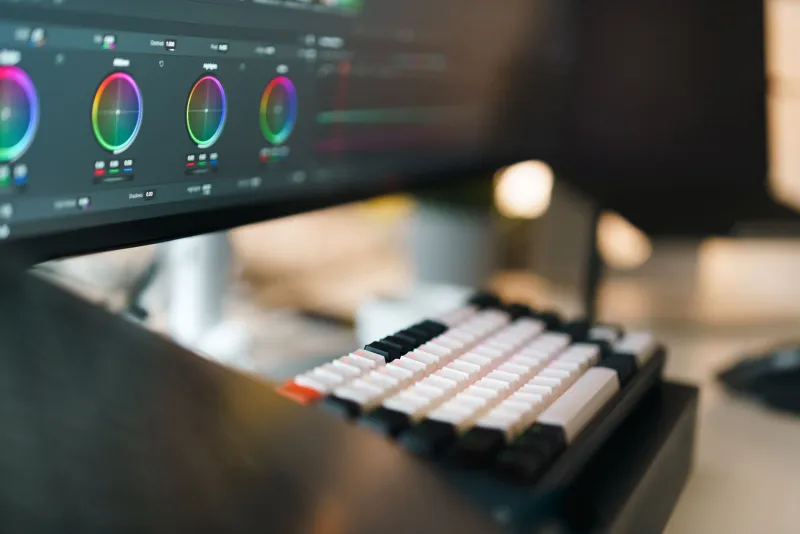
If editing is the grammar of a film, color grading is the tone of voice. And right now, colorists are getting more creative latitude than ever before.
The explosion of streaming platforms has pushed color grading into a new era. Netflix, Apple TV+, and Amazon Prime have all invested heavily in HDR pipelines and Dolby Vision workflows, which means colorists are working with a vastly wider canvas. A skilled colorist isn't just balancing skin tones and correcting for lighting inconsistencies — they're building a visual world from the ground up.
Some of the most distinctive visual signatures in contemporary film and television belong not to cinematographers alone, but to the colorist-DP partnerships that developed during post. Shows like Euphoria owe as much to the grade as they do to the lens.
"The grade is where the emotion lives," says one senior colorist at a boutique post house in Los Angeles who asked to remain anonymous. "I've seen scenes that felt flat on set completely transform once we found the right palette. It's not magic — it's storytelling."
VFX Houses as Narrative Architects
Then there's the world of visual effects, which has undergone its own quiet revolution. VFX isn't just about explosions and space battles anymore. Some of the most nuanced visual work happening in film today is invisible — de-aging, environment extensions, light manipulation that makes practical photography look like something that couldn't exist in the real world.
Companies like DNEG, Weta FX, and ILM have grown into creative partners that directors actively collaborate with during pre-production, not just after the fact. The conversation has shifted from "fix it in post" to "let's design this together from day one."
That shift is significant. It means post-production professionals are now sitting at the table during creative development — influencing shot design, location choices, and even casting decisions based on what's achievable in post.
The Rise of the Boutique Post House
Not all of this creative energy is concentrated in the big legacy facilities. Across the US, smaller boutique post houses are carving out serious reputations by offering something the big studios sometimes can't: genuine creative investment.
In cities like Atlanta, Austin, and Chicago — markets that have grown dramatically as production hubs over the last decade — independent post facilities are attracting both studio overflow and indie filmmakers who want partners, not vendors. These smaller shops tend to build long-term relationships with directors and producers, which means they develop a deep understanding of each project's creative DNA.
The result is work that feels intentional rather than processed. And in a media landscape crowded with content, intentionality stands out.
What This Means for Producers and Directors
For anyone building a production pipeline right now, the takeaway is clear: think about post early and think about it seriously. The best post-production partners aren't the ones you call when you've wrapped — they're the ones you loop in during development, who can flag opportunities and challenges before a single frame is shot.
That kind of collaboration requires trust, transparency, and a willingness to share creative control. It also requires producers to understand that the editing room isn't where their vision gets diluted — it's often where it gets sharpened.
At Undroid Productions, we've seen firsthand how the line between production and post has blurred in the most productive ways. The storytellers in those dark rooms with their timelines and scopes and color wheels are doing something genuinely remarkable. They're finishing sentences that started on set — and sometimes, they're writing entirely new ones.
The director's vision matters. Always. But the editor's instinct, the colorist's eye, and the VFX artist's ingenuity? Those are the things that make a film feel alive.
And that's not a support function. That's filmmaking.